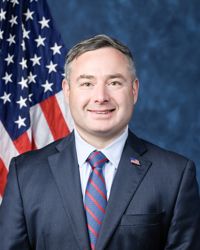
Historical Lenses
How history's strategists and presidents map onto this legislator's positioning, alliances, and rhetorical strategy.
AI-generated interpretive readings, written by Anthropic's Claude from this member's party, chamber, leadership role and recent sponsored bills. They are analytical thought experiments, not statements of fact about the legislator. About the lenses · Persona disclosure.
Power Persona Lenses
Caesar built his political identity by routing institutional opposition through direct public appeal, bypassing Senate procedural obstruction to deliver populist wins. Vindman similarly short-circuits conventional legislative positioning: a freshman with zero sponsored bills and 95 cosponsors, he leverages his public testimony fame — the NSC whistleblower moment — as a substitute for seniority-based credibility. His bill targeting private-plane tax deductions mirrors Caesar's calculated attacks on aristocratic excess, framing concentrated wealth as an institutional corruption problem. The power base is not the committee room; it is the public narrative built outside it.
Hearst understood that controlling the story of a conflict mattered more than winning any single legislative skirmish, and Vindman entered Congress already having won the narrative war on national security credibility. His cosponsor-heavy, zero-sponsor profile suggests he is functioning as a signal amplifier for allied messaging rather than an originator of legislative text — exactly the Hearst model of editorial leverage without direct authorship. The private-plane deduction bill is itself a media-ready instrument: low probability of passage, high yield in earned media and donor activation. Hearst's Spanish-American War dispatches demonstrated that framing the question often determines the outcome before the vote is ever called.
Sun Tzu's central insight — that supreme excellence is breaking the enemy's resistance without fighting — maps onto Vindman's congressional posture precisely because his most consequential political act to date required no floor vote. His 2019 testimony before the House Intelligence Committee dismantled an incumbent president's impeachment defense not through legislation but through disciplined information release on chosen terrain. In the 119th Congress, a cosponsor-first strategy keeps him off the legislative battlefield where seniority disadvantages him while keeping his name attached to the progressive caucus's preferred fights. The Art of War counsels knowing when not to engage directly; Vindman's bill portfolio reflects that discipline.
Presidential Lenses
Eisenhower institutionalized the military-industrial complex critique even while operating inside it, and Vindman occupies a structurally similar tension as a decorated combat officer now wielding that credential against defense-establishment norms. Eisenhower's genius was using coalition discipline — holding NATO together through economic instruments rather than constant military demonstration — and Vindman's cosponsor strategy reflects a parallel logic: build the coalition first, minimize unilateral exposure. The private-plane tax bill is an economic instrument deployed as a credibility marker, not a serious revenue proposal, much as Eisenhower's early budget battles were coalition signals more than fiscal plans. Both figures communicate authority through institutional biography rather than through rhetorical maximalism.
Obama governed through sustained engagement backed by the credible threat of public pressure, and Vindman's legislative identity replicates that architecture in miniature: high-profile restraint, cosponsor accumulation, and a single sponsored bill chosen for its symbolic clarity over its legislative viability. Obama's first-term posture — present on many fights, definitive on few — drew criticism for passivity but built cross-caucus alliance depth that served him in 2012 and the ACA endgame. Vindman's 95 cosponsors on others' bills versus zero sponsors suggests a deliberate constituency-building patience that matches Obama's preference for positioning over confrontation. Both entered national prominence through moments of institutional truth-telling that defined their public persona before any policy record was established.
Generated 2026-05-04
Bills Sponsored (0)
Bills Cosponsored (12)
Cite this page
APA
Apprised.news. (n.d.). Vindman, Eugene Simon — Dossier. Retrieved 2026-10-26, from https://apprised.news/legislator/V000138
MLA
"Vindman, Eugene Simon — Dossier." Apprised.news. Web. 2026-10-26. <https://apprised.news/legislator/V000138>.
Chicago
"Vindman, Eugene Simon — Dossier." Apprised.news. Accessed 2026-10-26. https://apprised.news/legislator/V000138.
BibTeX
@misc{apprised_vindman_eugene_simon_dossier,
  title = {Vindman, Eugene Simon — Dossier},
  publisher = {Apprised.news},
  url = {https://apprised.news/legislator/V000138},
  note = {Accessed 2026-10-26}
}
Data sources
Member metadata and bill associations sourced from Congress.gov v3 API. Statement-vs-vote and statement-vs-market gap detectors land in a follow-up release. External profile: bioguide.congress.gov.