 TOPIC
TOPIC
Artificial Intelligence: Understanding AI's Core Concepts and Impact
Artificial intelligence is transforming industries and societies. Learn about its mechanisms, key players, and ethical debates shaping its future.
What is Artificial Intelligence
Artificial Intelligence (AI) refers to the simulation of human intelligence in machines that are programmed to think like humans and mimic their actions. AI includes a spectrum of technologies such as machine learning, natural language processing, and neural networks. It enables machines to learn from experience, recognize patterns, understand human language, and make decisions. AI's applications range from simple tasks like voice recognition and recommendation algorithms to complex ones like autonomous vehicles and predictive analytics.
AI's significance lies in its potential to increase efficiency, reduce costs, and create new opportunities in various sectors, including healthcare, finance, and manufacturing. However, it also raises concerns about job displacement, privacy, and the ethical use of AI.
How AI Works
AI systems are built on algorithms that process large amounts of data to identify patterns and make predictions or decisions. Machine learning, a subset of AI, empowers these systems to learn and improve from experience without being explicitly programmed. There are two main types: supervised learning, where the algorithm learns from labeled data, and unsupervised learning, where the algorithm finds patterns in unlabeled data.
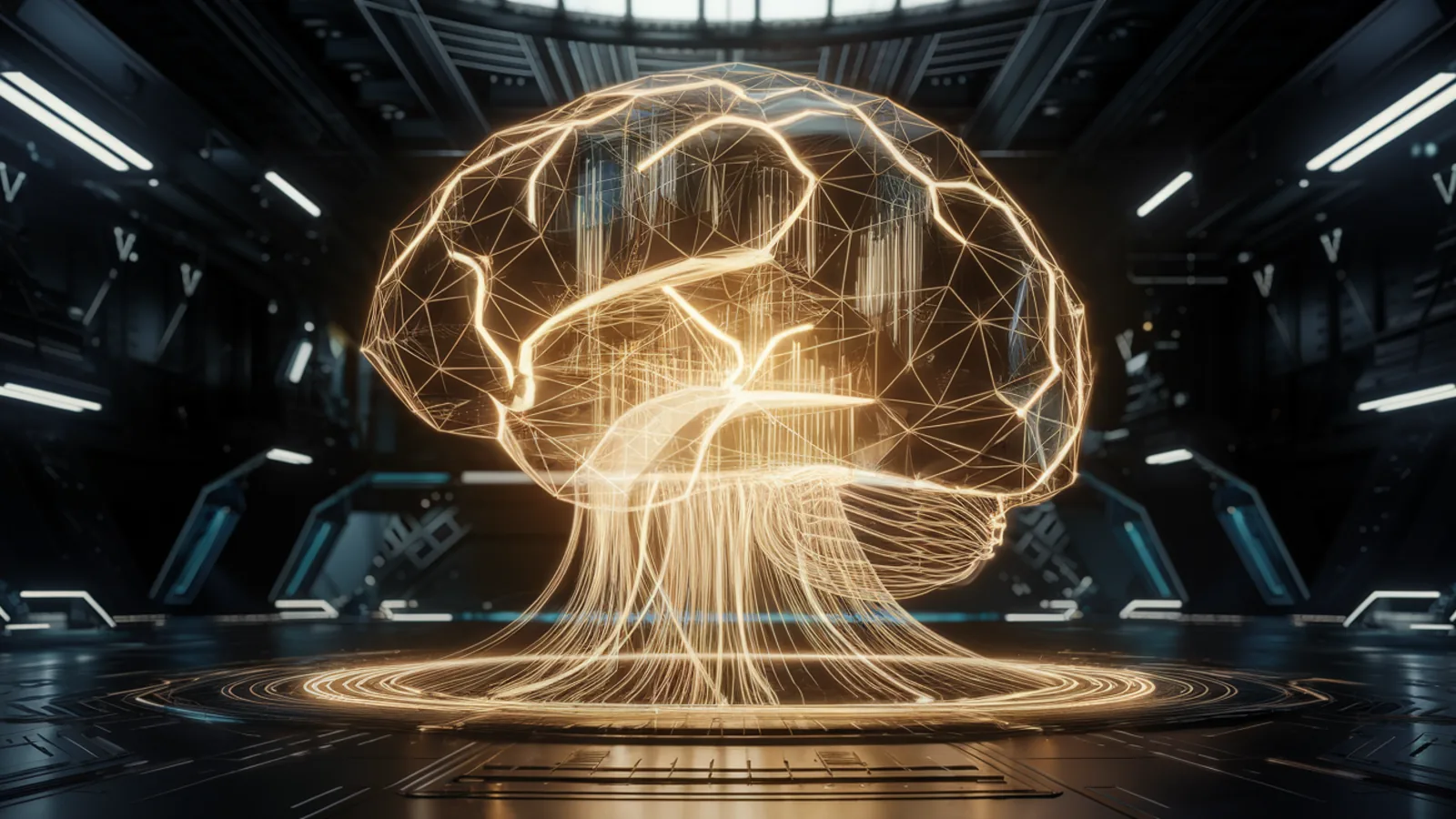
Neural networks, inspired by the human brain, are a key component of AI, particularly in deep learning. These networks can process complex data like images and speech. Reinforcement learning is another technique where AI learns by interacting with an environment and receiving feedback. The development of AI also relies on natural language processing, which allows machines to understand, interpret, and generate human language.
Key Players in AI
Tech giants like Google, Microsoft, and IBM are at the forefront of AI development, investing heavily in research and applications. Startups like Anthropic and OpenAI are also making significant contributions, particularly in generative AI and large language models (LLMs). Governments and academia play crucial roles in AI research, policy-making, and ethical considerations.
Internationally, the US and China are seen as the leading AI powers, competing in AI capabilities with implications for economic and military supremacy. Other countries are also investing in AI to enhance their competitiveness. The global nature of AI development involves collaboration and competition among various stakeholders.
Debates and Challenges in AI
AI's rapid development has sparked numerous debates. One central issue is the ethical use of AI, including concerns about bias in AI algorithms due to the data they're trained on. There's also a debate on the impact of AI on jobs, with some arguing it will lead to widespread unemployment while others believe it will create new opportunities.
Privacy is another significant concern, as AI's data processing capabilities can infringe on individual privacy rights. Security is also a concern, with the potential for AI to be used in malicious ways, such as deepfakes or autonomous weapons. Governance of AI is a complex issue, with discussions on how to regulate AI globally to ensure it's used responsibly and ethically.
Current State and Future of AI
Currently, AI is being integrated into various industries, with applications in healthcare for diagnosis, in finance for fraud detection, and in transportation for autonomous vehicles. AI is also being used in cybersecurity to detect threats and vulnerabilities. However, the technology is still in its relative infancy, and its full potential is yet to be realized.
Looking ahead, AI is expected to become more sophisticated, with advancements in understanding context and emotions. The integration of AI with other technologies like the Internet of Things (IoT) will create new possibilities. However, the future of AI will also depend on how societies address its ethical, legal, and social implications.
Frequently asked questions
What is the difference between AI and machine learning?
AI is a broader concept that includes machine learning, which is a subset of AI. AI refers to the simulation of human intelligence in machines, while machine learning is a method within AI that allows machines to learn and improve from experience without being explicitly programmed.
What are some ethical concerns with AI?
Ethical concerns with AI include the potential for biased algorithms, job displacement, privacy infringement due to data processing, and the possibility of AI being used maliciously. There's also a debate on how to govern AI to ensure its responsible and ethical use.
How can AI impact the job market?
AI has the potential to automate certain tasks, leading to job displacement in some sectors. However, it can also create new job opportunities and industries. The net impact on employment is a subject of debate, with some predicting significant job loss and others foreseeing job transformation and creation.
What is the role of governments in AI development?
Governments play a crucial role in funding AI research, setting policies, and regulating AI to ensure ethical use. They also need to balance the promotion of AI innovation with the protection of citizens' rights and the development of international norms for AI governance.
Sources & further reading
Latest developments from Apprised desks AI analysis
- Tech & Cyber Desk brief, : KEV five-pack, FTC AI probes, and Anthropic's evaluator move converge
- Tech & Cyber Desk brief, : OpenAI insider bugging arrest + record 1,407-CVE Microsoft Patch Tuesday
- Tech & Cyber Desk brief, : Meta enters the frontier-model race; Muse agent's safety case collapses same day
- Tech & Cyber Desk brief, : FBI disrupts Flax Typhoon; $2.4B Genesis AI pledge; OpenAI safety firings
AI-generated analysis from Apprised’s automated desks, not original reporting. A dated brief is listed when its lead or top stories match this topic under fixed keyword rules; newest first, from the last 14 days of daily briefs. See our methodology.